Vinyasa classes often move at a familiar rhythm: one breath, one movement, and on to the next pose. For some students, that pace feels energizing. For others, it can make transitions difficult, leave little time to find stability, or make it harder to stay connected to the breath.
Slowing down doesn't mean taking the movement out of vinyasa. It means being more intentional about how you move through it.
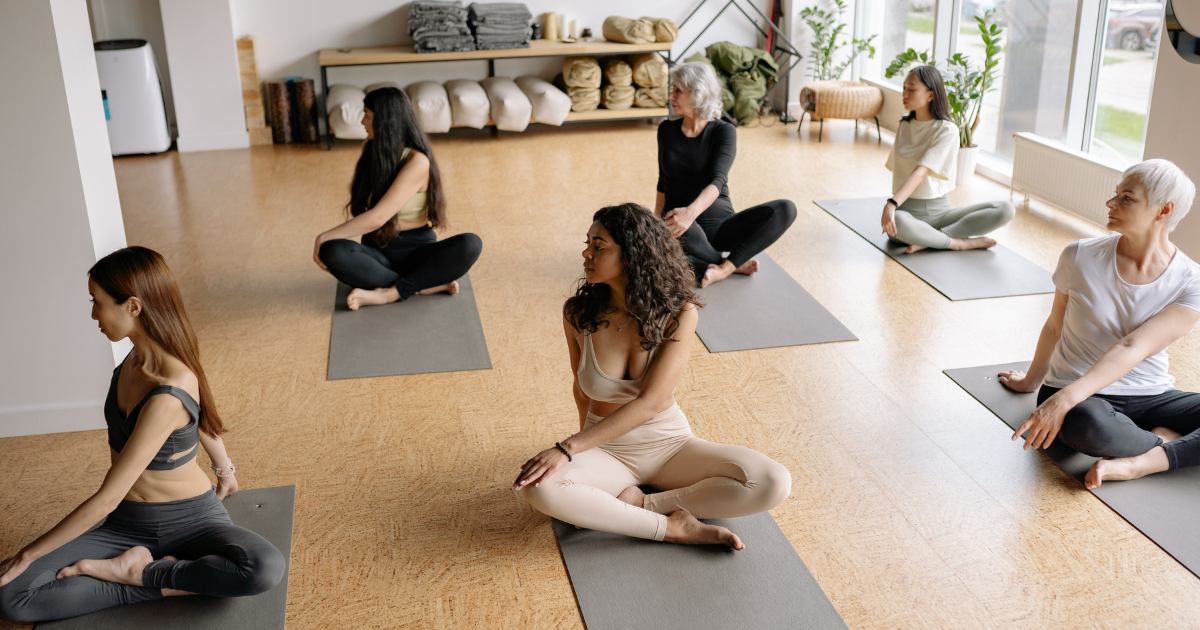
A slower flow gives students more time to understand the movements, explore their range of motion, and make adjustments along the way. For teachers, it creates more opportunities to observe the room and offer variations that meet different needs.
Here are five ways to bring more intention to your next slow flow class.
1. Give the warm-up time to do its job
Jumping straight into Sun Salutations asks students to coordinate movement and breath before they've had much time to settle into their practice.
Start with a few minutes of gentle movement. Cat-cow, easy spinal twists, shoulder rolls, and slow arm circles give students an opportunity to explore movement before building toward more involved sequences.
This is also your first chance to observe. Notice how students move through familiar patterns. Are they comfortable bearing weight through their hands? Do they seem steady in standing positions? Are they moving freely or working around limitations?
These observations can help inform the choices you make throughout class.
2. Build heat without relying on big shapes
A class doesn't need deep lunges, challenging balances, or long holds at the edge of someone's range of motion to feel engaging.
You can build warmth through repetition, controlled movement, and a steady pace. Try moving in and out of chair pose with the breath, repeating a supported lunge, or adding small movements within a comfortable range.
The goal is to offer students opportunities to build strength and explore effort without making a particular depth or range of motion the measure of a successful practice.
3. Make props part of the flow
Props shouldn't feel like an afterthought or something students need to request when a pose becomes difficult. They can be an integral part of the sequence from the beginning.
Set up blocks for standing poses and lunges, offer a chair for balance or support, and incorporate a bolster for moments of rest.
When props are introduced as standard teaching tools, students can choose the support that works for them without feeling singled out. It also makes transitions smoother because everyone knows where their props fit into the practice.
4. Sequence for ease and continuity
A thoughtful flow considers not only the poses themselves but also how students get into and out of them.
Limit unnecessary transitions between standing and floor-based sequences. Group similar positions together, allow enough time to settle into each shape, and repeat shorter sequences so students can become familiar with the movement.
Repetition also gives students an opportunity to shift their attention away from following instructions and toward noticing their own experience.
A steady, well-paced sequence can create a meditative quality without requiring a separate meditation at the end.
5. Leave room for individual exploration
Teaching a slower class doesn't mean asking everyone to move in exactly the same way at a slower speed.
Offer variations, demonstrate different ways to approach a pose, and give students time to decide what feels appropriate for their bodies that day.
Some students may choose a deeper expression of a movement, while others may prefer a smaller range or additional support. Both can be part of the same class.
The teacher's role is to create a structure that allows for these differences rather than expecting every student to follow an identical sequence.
Take your teaching further: Yoga Therapeutics Essentials
Slow Flow Essentials is one component of Prema Yoga Institute's 100-hour Yoga Therapeutics Essentials training.
The training explores practical approaches to warm-ups, sustainable sequencing, building heat within different ranges of motion, and incorporating props into movement practices. You'll develop a deeper understanding of how to adapt your teaching and create classes that account for the different bodies, experiences, and needs in the room.
A practice to bring into your next class
Take a sequence you already teach and reduce the number of poses by half. Move through the shorter sequence twice, taking a little more time with each movement the second time around.
Notice what changes. Do students have more time to settle into transitions? Are there more opportunities to offer variations? Does the sequence feel different when there's less to keep track of?
Then try the same approach in your own practice. Move through three rounds of cat-cow, taking twice as long with each breath. Notice where you naturally want to rush, and what becomes available when you give yourself more time.
Sometimes, better teaching starts with learning to slow down yourself.
Related reading from our sister school, NESBEM: Why the Most Important Technology You'll Ever Calibrate Is Your Own Living System.