
Most yoga teachers learn how to teach poses. Learning how to teach people requires something more. In any given class, you might have a runner managing back pain, someone returning from a wrist injury, and a beginner who hasn't been on the mat in years. They may all be practicing Warrior II, but their bodies bring different needs, experiences, and abilities into the room.
The question isn't how to get everyone into the same pose. It's how to make the practice accessible to the people in front of you. Here are a few ways to start.
Start with the person, not the pose
As students arrive, take a moment to check in. Ask if there's anything you'd benefit from knowing before class, such as an injury, recent surgery, or ongoing discomfort.
That simple conversation helps establish trust and gives you an opportunity to offer appropriate options. If someone reports new, sharp, or unexplained pain, avoid asking them to work through it and encourage them to seek guidance from a qualified healthcare professional.
Once class begins, keep observing. Breath, facial expression, and the way someone transitions between poses can tell you a great deal. Alignment is one part of the picture, but how a student is experiencing the movement matters just as much.
Make props part of the practice
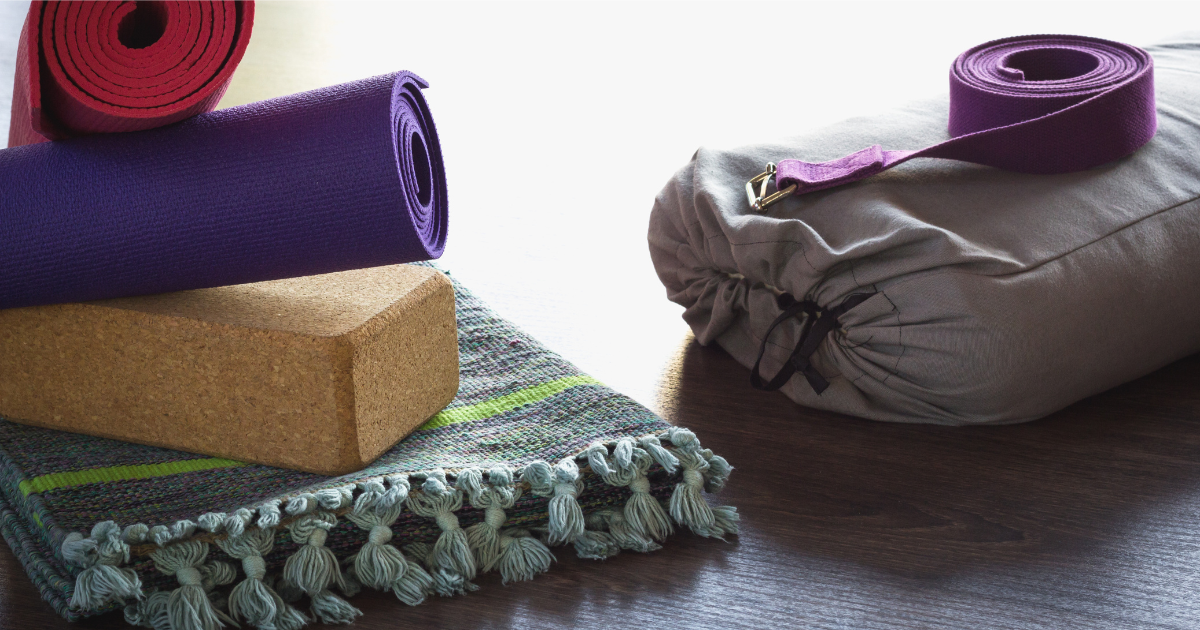
When blocks, straps, chairs, and bolsters are presented only as modifications, students who use them can feel as though they're doing something different from everyone else.
Instead, make props part of your primary teaching approach. Demonstrate a pose with support from the beginning, and invite students to explore what works for their bodies.
For a deeper exploration, Prema Yoga Institute graduate Jenny Clise's The Complete Guide to Yoga Props (Human Kinetics, 2024), featuring a foreword by Dr. Loren Fishman, offers more than 120 poses using blocks, straps, bolsters, blankets, chairs, and walls. It's a valuable resource for teachers looking to expand their understanding of accessible and supported practice.
Teach one pose, offer different pathways
Consider Warrior II. A student might practice it standing freely, with the support of a wall, or seated in a chair.
Each variation offers an opportunity to experience the pose. None needs to be presented as the lesser option. Offer the choices, explain the differences, and allow students to decide what feels appropriate that day. Their needs may change from one class to the next, or even from one side of the body to the other.
This is an important part of teaching therapeutically: creating space for students to develop awareness and make informed choices about their own practice.
Take your teaching further: Yoga Therapeutics Essentials
Adapting yoga for different bodies and life experiences is a skill that develops with study and practice.
Yoga for All Bodies is one component of Prema Yoga Institute's 100-hour Yoga Therapeutics Essentials training. You'll explore approaches for back care, older adults, beginners, osteoporosis, scoliosis, arthritis, and common injuries, with practical instruction in using chairs, walls, and other props.
A practice to bring into your next class
Before your next class, choose one pose and plan three variations: on the floor, at the wall, and in a chair. Present each as an equally valid option and invite students to choose.
Then try something yourself.
Sit in a chair with both feet resting on the floor. Take a few slow breaths. When you're ready, stand up as slowly as you can. Notice the coordination, strength, balance, and awareness involved in that seemingly simple movement.
It's a useful reminder that what looks like a small movement from the outside can involve quite a lot from the inside. The best teaching doesn't ask every body to do the same thing. It gives each student a way to participate, explore, and experience the benefits of practice.
Related reading from our partner school, NESBEM: Your Body Is Not Indifferent to Time.