

Yoga in Cancer Care: A Decade of Evidence for an Emerging Clinical Specialty

Ten years ago, a yoga therapist suggesting their practice belonged inside an oncology treatment plan would have had to make that case largely on instinct and compassion. That is no longer true, and that shift deserves to be known more widely, especially among the people doing this work.
In 2018, researchers conducted the most comprehensive review to date of yoga's role in cancer care, searching PubMed through the end of 2016 and identifying 138 clinical trials that met inclusion criteria, 110 of them randomized or non-randomized controlled trials, spanning more than 10,660 patients across 20 countries (Agarwal & Maroko-Afek, International Journal of Yoga, 2018). That is not a handful of hopeful pilot studies. That is a substantial, internationally replicated body of evidence, built by researchers who wanted to know, rigorously, whether this was real.
The review's conclusion was direct: "in the vast majority of the studies, the yoga intervention was found to be beneficial and yielded positive effect on all the measures." Patients across breast, colorectal, lung, and blood cancers, along with hematopoietic stem cell transplant recipients, showed improvements in physical symptoms, psychological symptoms, quality of life, treatment-related side effects, and markers of immunity, inflammation, and stress. The authors described the accumulated findings as offering "strong support for yoga's integration into conventional cancer care."
Two things are equally true here, and both deserve care. First, yoga's role is as an adjunct, not a treatment. The same review states plainly that direct evidence for yoga preventing cancer, halting its progression, or curing it is "almost lacking," and the authors are clear that yoga walks alongside surgery, chemotherapy, and radiation, never in place of them. Second, most of this evidence comes from breast cancer populations; the case for other cancer types, while promising, is still being built, patiently, study by study.
What the evidence supports clearly, and what matters enormously to an actual person living through treatment, is yoga's role in symptom management and quality of life: reduced anxiety and depressive symptoms, better sleep, less fatigue, and measurable shifts in stress and inflammation markers. These are not small things when you are the one going through it. They are, often, the difference between a hard season and an unbearable one.
This is exactly the kind of adjunct, evidence-grounded work a trained yoga therapist can offer that a general yoga teacher is not prepared for: modifying practice around a client's treatment stage, energy level, and physical limitations, staying in real communication with the client's oncology team, and knowing which practices belong at which point in a treatment course. It takes genuine clinical literacy to do this well, not just good intentions, however sincere.
Prema Yoga Institute's Yoga Therapy Certification includes a dedicated Cancer Care practicum specialization for students who want to show up for this work fully prepared. See current practicum and certification details.
Interested In Learning More About Our Yoga Therapy Certification? Click here.
The Emerging Science of Sound: Chanting, Vagal Tone, and Vibrational Yoga Therapy
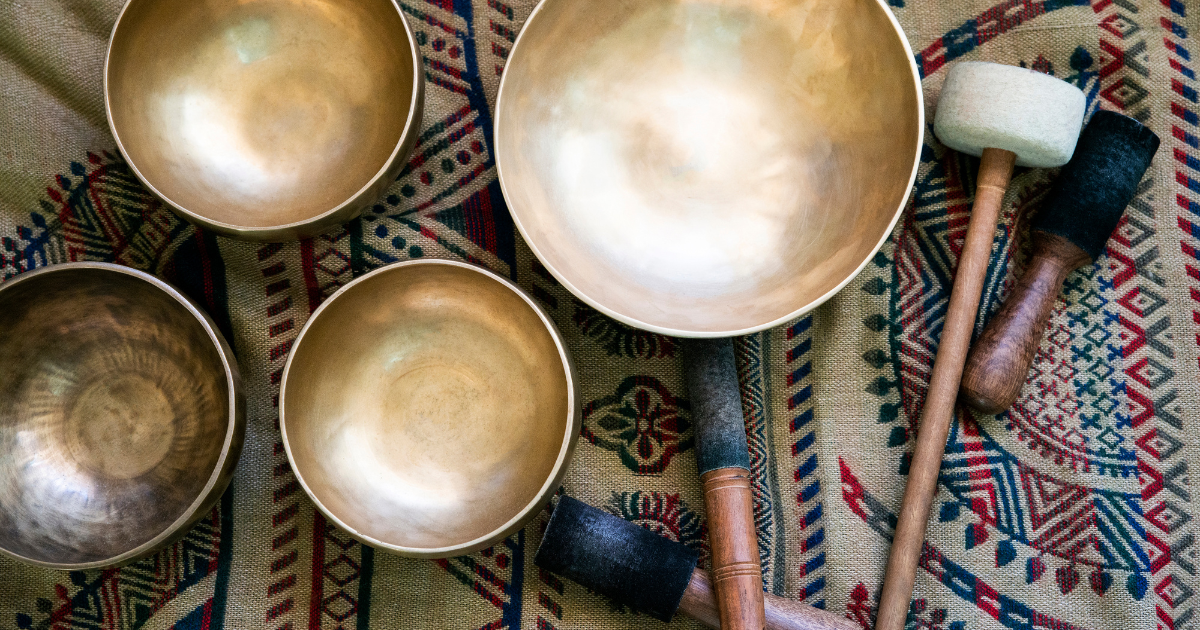
Sound has been part of yoga practice for as long as the tradition has existed: chanting, mantra, the resonance of a singing bowl settling over a room. What has changed recently is that researchers have started measuring what that sound is actually doing to the nervous system while it happens, and the findings are genuinely worth sharing with your students.
Om chanting is one of the better-studied examples. In a controlled comparison, researchers found that Om chanting produced an immediate increase in high-frequency heart rate variability, a marker of parasympathetic, "rest and digest" nervous system activity, alongside a corresponding drop in markers linked to sympathetic, fight-or-flight activation (PMC). In plain terms: the vibration and extended exhale of chanting a single, sustained tone appears to shift the nervous system toward a calmer, more regulated state in real time, measurable on a heart rate monitor, not just felt in the room.
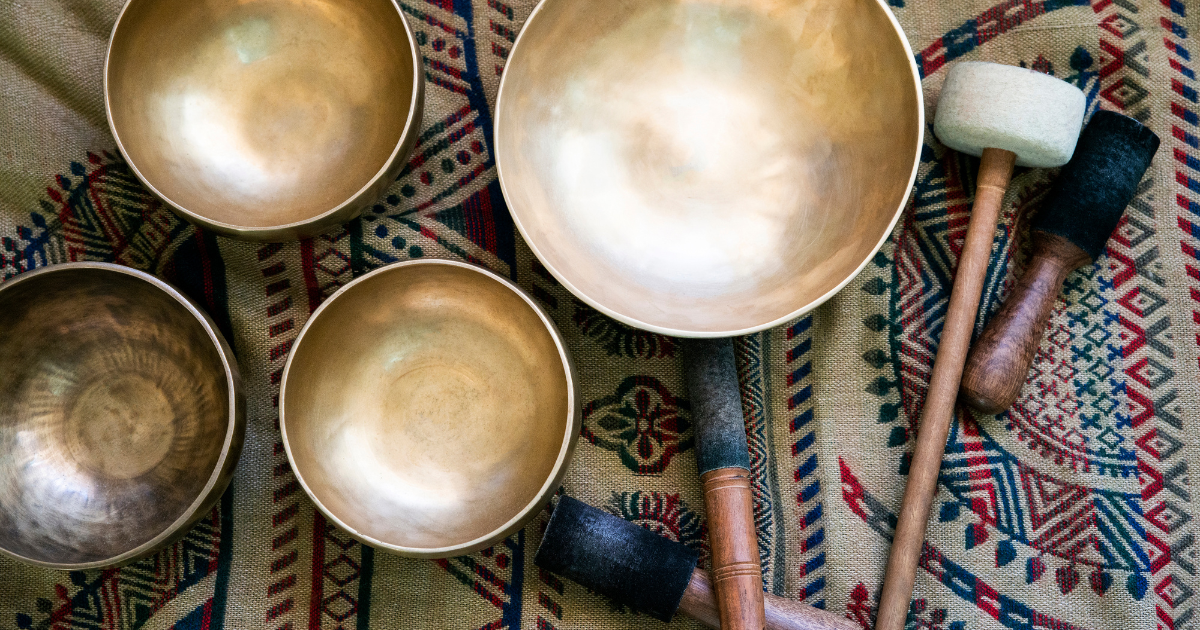
Singing bowls tell a similar story from a different angle. A 2025 study on Tibetan singing bowl practice found that most trials reported significant reductions in anxiety and depressive symptoms, alongside improvements in well-being and quality of life among participants (Lin et al., 2025, MDPI). Broader research on sound and vagal tone points toward a shared mechanism across these different practices: slow, extended, resonant sound production, whether through chanting, humming, or toning, appears to be one of the more accessible ways to stimulate vagal activity and help the body step out of a stress response (Bright Beings Academy).
The evidence is also worth naming clearly where it is still thin. Direct proof that instruments like gongs or singing bowls stimulate the vagus nerve through sound vibration alone, separate from the relaxation, breath changes, and stillness that usually accompany a sound session, is not yet settled (Olli Hess). What is better established is the wider category this sits inside: yoga, alongside other traditional movement and sound-based practices, has repeatedly been shown to influence the autonomic nervous system through slowed breath, sustained vocalization, and focused attention, working together (PMC).
For a yoga therapist, this research offers something genuinely useful and something quietly moving: sound is not a decorative add-on to a session, it is a physiological tool with a measurable effect on the nervous system, and one of the more accessible entry points for a client who finds seated meditation or complex asana out of reach. A single sustained Om, or a few minutes with a singing bowl, can be a real place for someone to begin, even when nothing else feels available to them yet.
Prema Yoga Institute's signature Sound Yoga Therapy course trains teachers to work with these tools with the same care and rigor we apply to any other technique in the curriculum. Learn more about the Sound Yoga Therapy course.
Interested In Learning More About Our Yoga Therapy Certification? Click here.
Yoga and Bone Health: What a Decade of Research on Osteoporosis Actually Shows
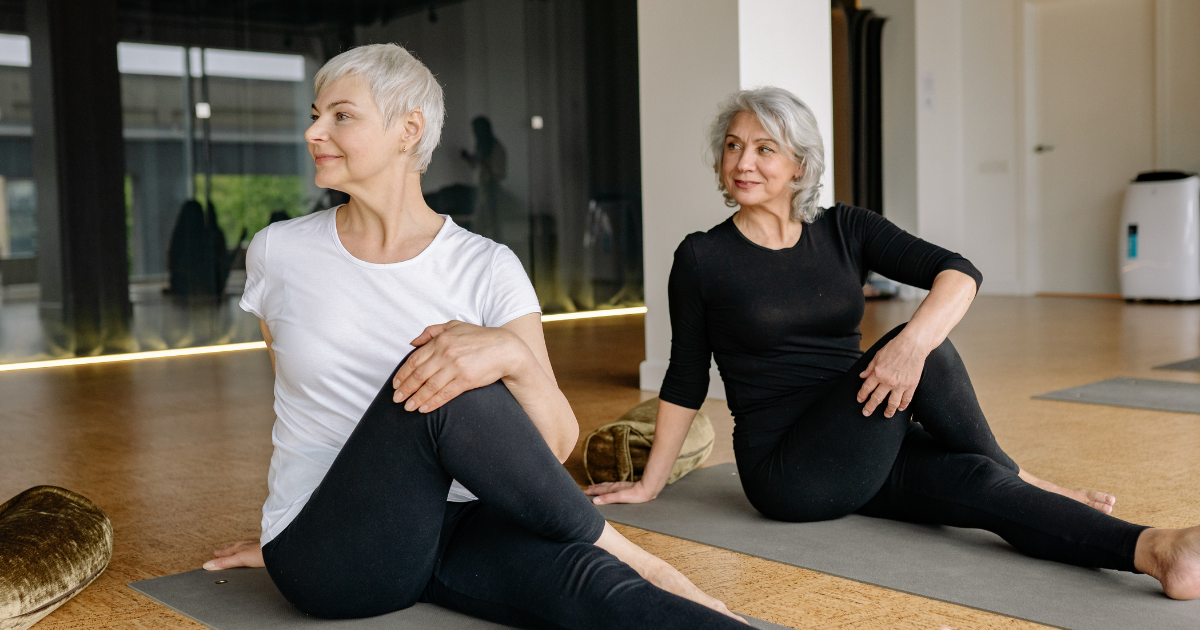
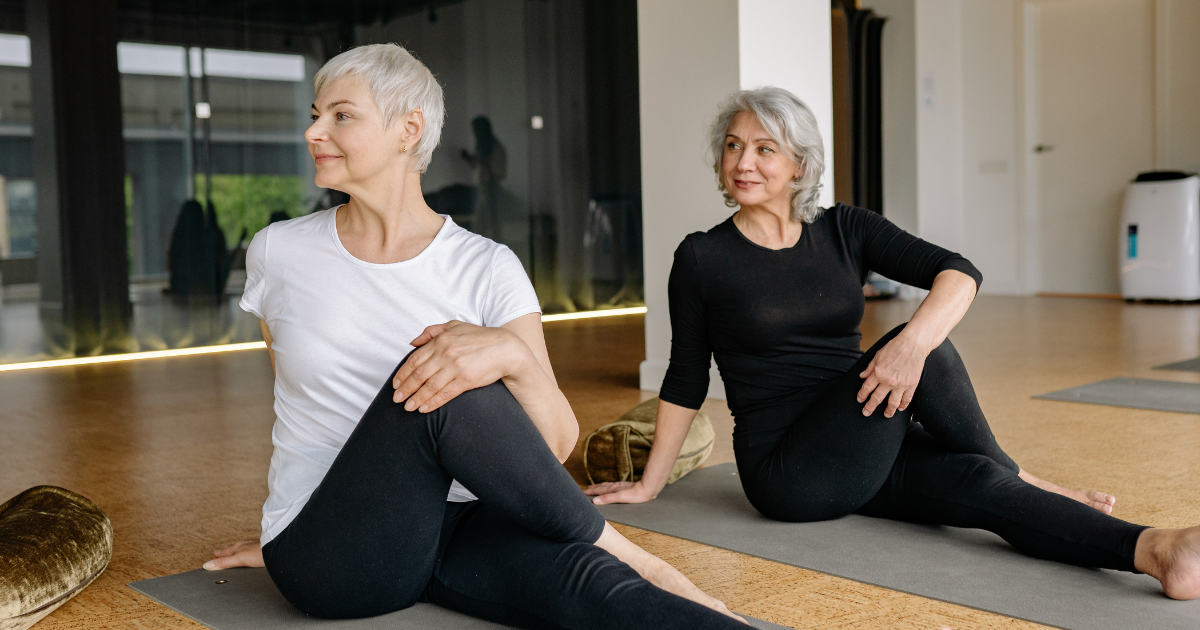
If you teach older adults, someone has almost certainly asked you whether yoga can help with osteoporosis. It is a question worth taking seriously, and the most substantial answer we have comes from a study that ran, patiently, for a full decade.
Dr. Loren Fishman, a physiatrist at Columbia University, began recruiting participants in 2005 for a study on a 12-minute daily yoga regimen: twelve poses, held for 30 seconds each, chosen specifically for their calculated effect on bone density at the spine, hip, and femur. By the time the study closed in 2015, 741 people had joined; 227 stayed compliant more often than every other day, and 174 of those, 83%, already had osteopenia or osteoporosis when they enrolled (Lu, Rosner, Chang & Fishman, 2015).
The most rigorous slice of the data comes from the 43 participants who stayed moderately to fully compliant and had complete bone density scans, before and after, using DXA imaging, the same standard used in a clinical osteoporosis diagnosis. Among this group, the researchers reported improvements in bone mineral density at the spine, hip, and femur. A smaller group of 18 participants also underwent a more detailed bone-quality assessment using high-resolution imaging of the hip.
It is worth naming clearly what this study is and is not, because that clarity is part of what makes it trustworthy. It was not a randomized controlled trial; it compared each participant's bone density before and after they began the practice, rather than against a separate group who did not practice yoga at all. The fully-documented, compliant group of 43 is a small fraction of the 741 who originally joined. These are real limitations, and they are part of why Fishman's team has kept studying the question rather than calling it settled. But within those limits, a decade-long, carefully measured study finding improved bone density in a population where 83% already had diagnosed bone loss is a meaningfully different claim than a vague sense that "yoga is good for your bones." It is evidence that a specific, structured practice, done consistently, may do something real, for a specific population, and that consistency, more than intensity, was the variable that mattered most.
For a yoga therapist or teacher working with clients managing osteopenia or osteoporosis, the takeaway is not "prescribe yoga for bone density." It is that thoughtful pose selection, careful alignment, and a sustained daily practice, even one as modest as 12 minutes, are worth taking seriously as part of a bone health plan built in coordination with a client's physician, not as a replacement for one.
Prema Yoga Institute's curriculum includes Yoga for Osteoporosis as an elective within the broader Yoga Therapy Certification track, alongside the anatomical grounding needed to teach it with real care. Explore PYI's course offerings.